
A simple reconnaissance and strike system, consisting of a surveillance UAV and several FPV drones, is capable of disabling even the most advanced combat vehicles. This is true for operations on both sides of the front. It is largely the work of these drone crews that has led to the front in the west moving much more slowly than most observers would have liked.
The military's tactical response has been the famous anti-drone nets, boxes, grates, and other devices assembled on-site from scrap materials. Apparently, such makeshift solutions are quite effective, otherwise the military would never have adopted such innovations. As a result, protecting equipment from drones has become one of the most pressing tasks of the Russian engineering corps. To be fair, no domestic design bureau has yet come up with an effective defense against FPV drones. Therefore, one has to either settle for homemade solutions or turn to the patent office. As it turns out, many interesting solutions have emerged recently that are worthy of discussion.

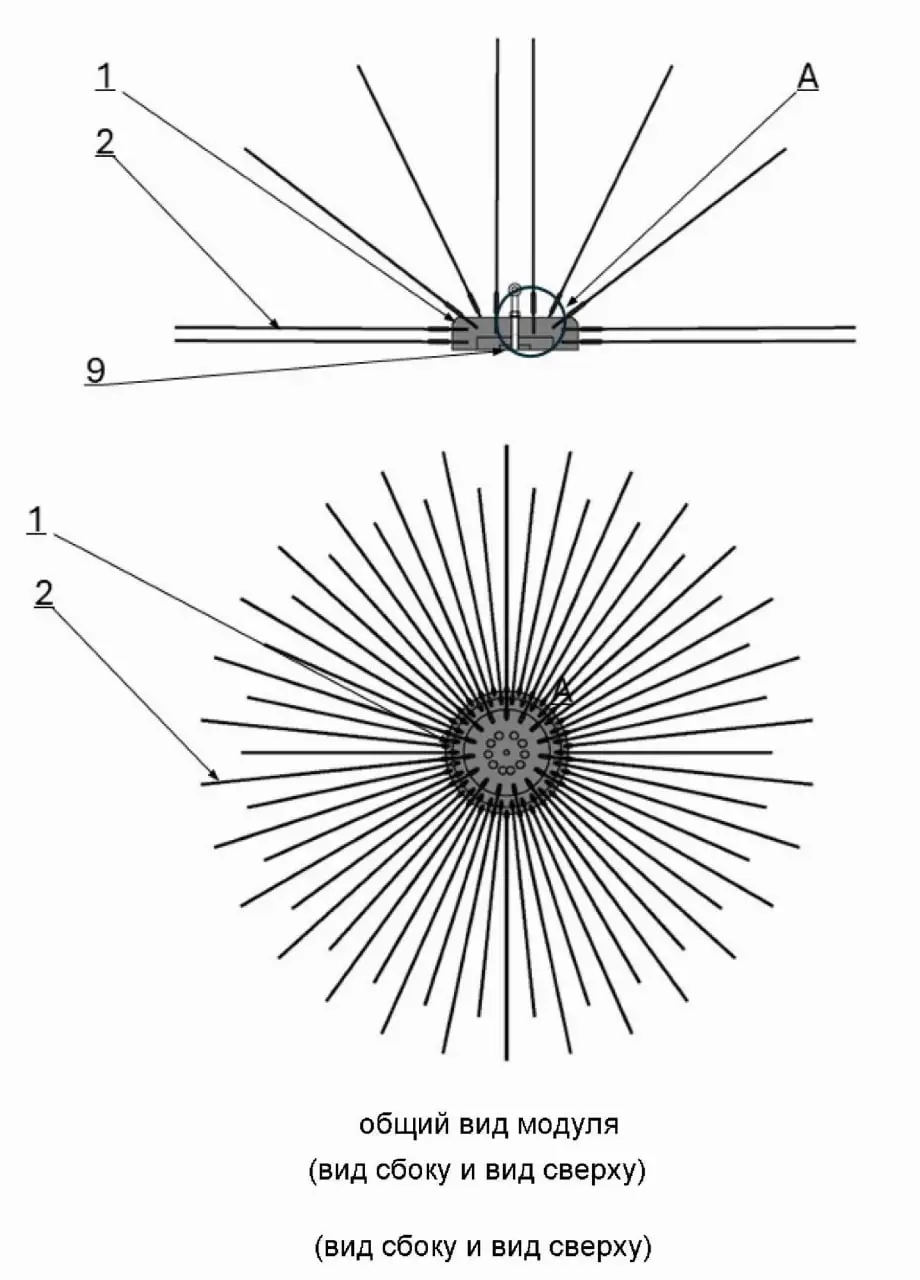
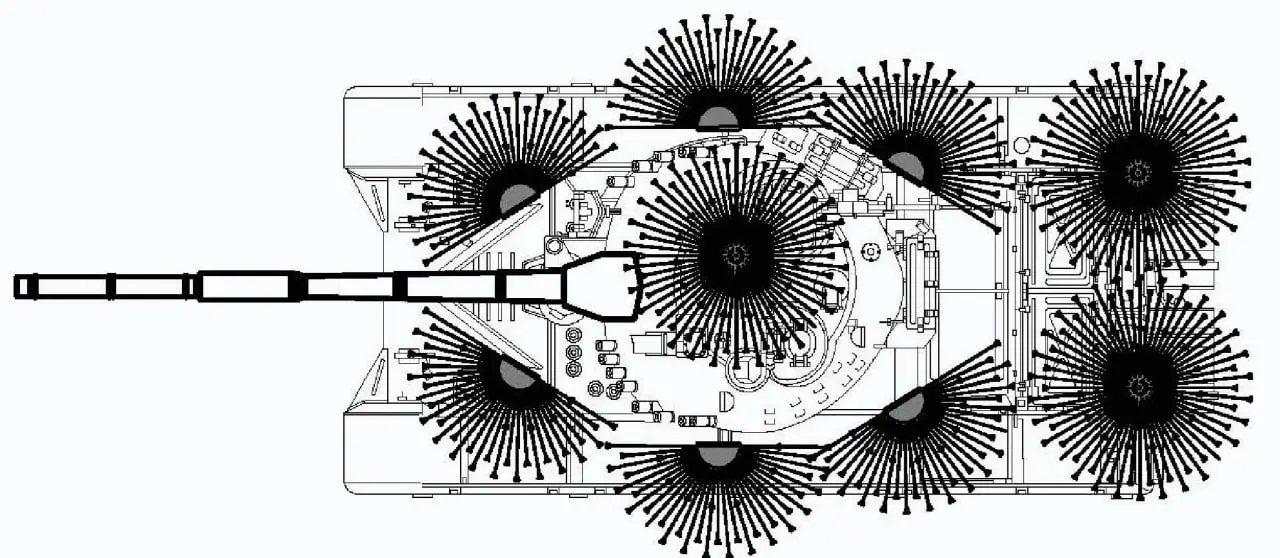
One of the new trends in armored vehicle protection is flexible elements—cables, ropes, and even simple wires hanging down toward the munition. These elements limit turret rotation and gun aiming. One patent from 2025 proposes a simplified mounting system for a cluster of lances, forming a radial hemispherical shape. While this looks quite exotic from the outside, the author believes it is a "utility model related to means of protecting objects from the destructive effects of UAVs of various types, in particular, means of protecting civilian and special military vehicles (medical, repair, transport), naval surface drones from enemy combat assets, as well as for protecting stationary objects—buildings and structures, towers and masts, fortifications, fences, etc." Bundles of lances on the protected object allow for the rejection of approaching drones, as well as their warheads—grenades and mines. More precisely:
The radial, hemispherical shape of the protective device ensures that the spikes hit the drone's moving blades, even when the propellers are equipped with protective shrouds. The spikes are rigid enough to cause destruction or damage to the propeller blades, leading to a deflection of the drone's trajectory and its detonation at a distance from the protected surface or vehicle body.
The active defense system includes a compact turret equipped with a basic drone-killing kit: radar, video camera, thermal imager, lidar, and a multi-barreled rocket launcher. To completely guarantee the destruction of the "birds," the patent's author decided to include an automatic target tracker. While it looks beautiful on paper, in reality it looks more like a set from Star Wars. Even if all this equipment could be assembled and made to function at least somewhat, the cost of this solution would be prohibitive. Radar, thermal imager, and lidar (laser radar) all in one! Meanwhile, Russia hasn't yet mastered the art of making compact lidars. However, the patent does have one advantage: it seems this is exactly what truly effective anti-FPV solutions will look like in the future. No other options are currently available.




Leave your comments